Areas of Study

Literary theory and poetics

Lorem ipsum dolor sit amet, consectetur adipiscing elit, sed do eiusmod tempor incididunt ut labore et dolore magna aliqua. Ut enim ad minim veniam, quis nostrud exercitation ullamco laboris nisi ut aliquip ex ea commodo consequat. Duis aute irure dolor in reprehenderit in voluptate velit esse cillum dolore eu fugiat nulla pariatur. Excepteur sint occaecat cupidatat non proident, sunt in culpa qui officia deserunt mollit anim id est laborum.”

Built around three seminal 20th century figures–the artist-designer Bruno Munari, the writer-educator Gianni Rodari, the novelist Italo Calvino–the course aims to explore structural, combinatory, and generative thinking about storytelling. It combines the study of literary theory and history, literary works such as folktales and children’s stories, and computer-assisted creation employing both textual and visual generative AI tools. By the end of the semester, the class will result in the creation of a well crafted, curated, and edited volume of AI folktales.

A re-examination of “Lyric” as occasion as well as genre. Central questions to be explored will include: how do the “lyrics” of composed song come alive in performance? For example, how do the two librettists of Puccini’s opera La Bohème contribute to the making of a masterpiece in song? Shared readings include The Lyric Theory Reader: A Critical Anthology, edited by Virginia Jackson and Yopie Prins.

Things I have learned from students who have taken my seminars in Comparative Literature, By Professor Greg Nagy.

Courses

Spring 2026

Dana-Palmer Seminar Room

Thursday

COMPLIT 290/ENG 290MH: Migration and the Humanities

Homi Bhabha

By focusing on literary narratives, cultural representations, and critical theories, this course explores ways in which issues related to migration create rich and complex interdisciplinary conversations. How do humanistic disciplines address these issues—human rights, cultural translation, global justice, security, citizenship, social discrimination, biopolitics—and what contributions do they make to the “home” disciplines of migration studies such as law, political science, and sociology? How do migration narratives compel us to revise our concepts of culture, polity, neighborliness, and community? We will explore diverse aspects of migration from existential, ethical, and philosophical perspectives while engaging with specific regional and political histories.

In Person

Spring 2026

Dana-Palmer Seminar Room

Tuesday

COMPLIT 299AR: Comparative Literature in Theory and Practice

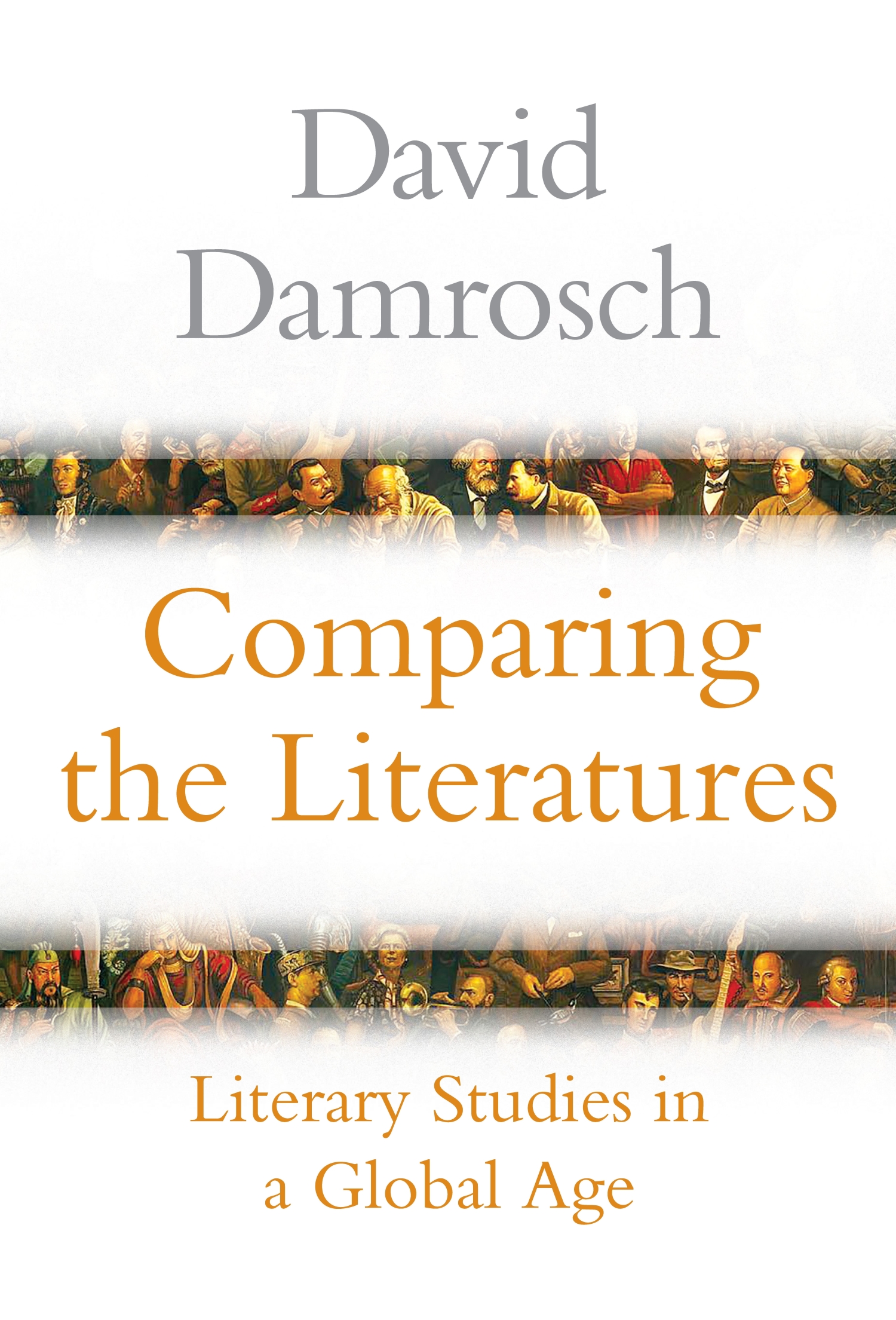
David Damrosch

An introduction to the discipline of comparative literature, looking at major issues in the history and current practice of the discipline as practiced in the USA, with special emphasis on seeing how comparatists enter into ongoing debates concerning theory and method. Several of our faculty will join us for the discussion of their work. Additional readings will include selections from Herder, de Staël, Adorno, Auerbach, de Man, Glissant, Said, Spivak, Apter, Venuti, and Heise.

In Person

Fall 2025

Kresge Room, Barker 114

Wednesday

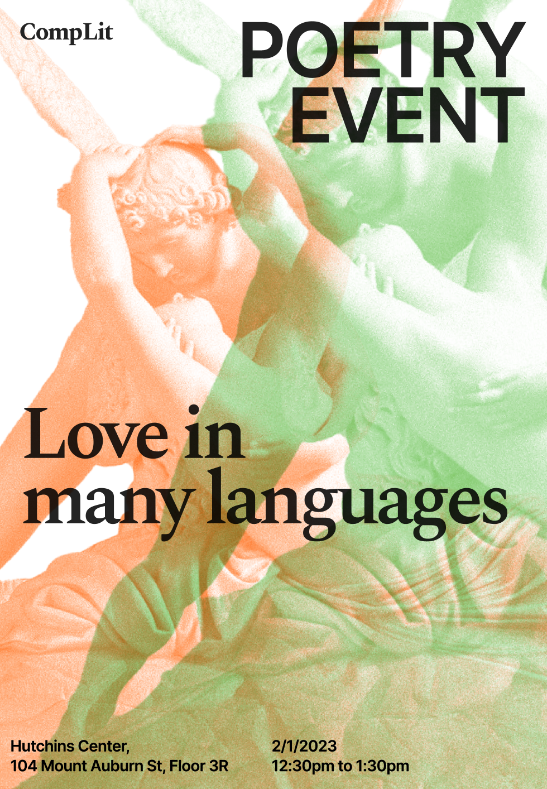
COMPLIT 193/RELIGION 1445/HDS 3725: What’s Love Got to Do With It; Love Poetry of the Middle Ages and Early Modernity

Luis Giron-Negron

Does love have a history? This course will explore a particularly rich, multisecular episode in the literary history of this emotion: the efflorescence and varieties of love poetry, both lyrical and narrative, in Europe and the Middle East from the Middle Ages through the 16th century. Weekly discussions will center on close readings of selected love poems and versified narrratives from a variety of literary traditions, including: Provençal troubadour lyric; French chansons, the Germanic Minnesang and the Galician-Portuguese cantigas (the question of amour courtois); Ibero-Romance and colloquial Arabic jarchas; the Italian dolce stil novo; the Petrarchan sonnet and its early modern heirs in Portugal, England and Spain; Arabo-Andalusian and Hispano-Jewish qaṣā’id and muwashshaḥāt, medieval Latin love lyric; Persian Sufi and Christian mystical love poetry; Dante’s Vita nuova; and selections from two other erotological classics in narrative verse, Libro de buen amor and Roman de la Rose. Discussions will be framed by an overview of both premodern discussions on love – how love is conceptualized at the intersection of philosophy, theology and medicine by Jewish, Christian and Muslim thinkers– and contemporary scholarly debates on the origins and development of medieval love literature.

In Person

Fall 2025

Dana-Palmer Seminar Room

Monday

COMPLIT 226: Peripheral Modernisms

David Damrosch

Recent years have seen attempts to rethink modernism as a global phenomenon rather than a mostly Anglo-American and West European movement. Center-periphery relations have often been foregrounded in these efforts, and in critiques of them. Building on theoretical statements by Jorge Luis Borges, Oswald de Andrade, Pascale Casanova, Susan Stanford Friedman, Franco Moretti, Oe Kenzaburo, and Roberto Schwarz, this seminar will explore the politics of language, representation, and center-periphery relations in works by Antonio Machado de Assis, Ryunosuke Akutagawa, Higuchi Ichiyo, James Joyce, Miguel Ángel Asturias, Franz Kafka, Eileen Chang, Clarice Lispector, Lu Xun, Ahmet Hamdi Tanpınar, and Pramoedya Ananta Toer.ars have seen ambitious attempts to rethink modernism as a global phenomenon rather than a largely Anglo-American and West European movement. Center-periphery relations have often been foregrounded in these efforts, and in critiques of them. Building on theoretical statements and critiques by Jorge Luis Borges, Kenzaburo Oe, Franco Moretti, Pascale Casanova, Emily Apter, Eric Hayot, and Susan Stanford Friedman, this seminar will explore the politics of language, periodization, and center-periphery relations both within and beyond the West, in works by Higuchi Ichiyo, James Joyce, Lu Xun, Ryunosuke Akutagawa, Virginia Woolf, Djuna Barnes, Borges, Kukrit Pramoj, Pramoedya Ananta Toer, and Derek Walcott.

In Person

Fall 2025

Plimpton Room, Barker 133

Friday

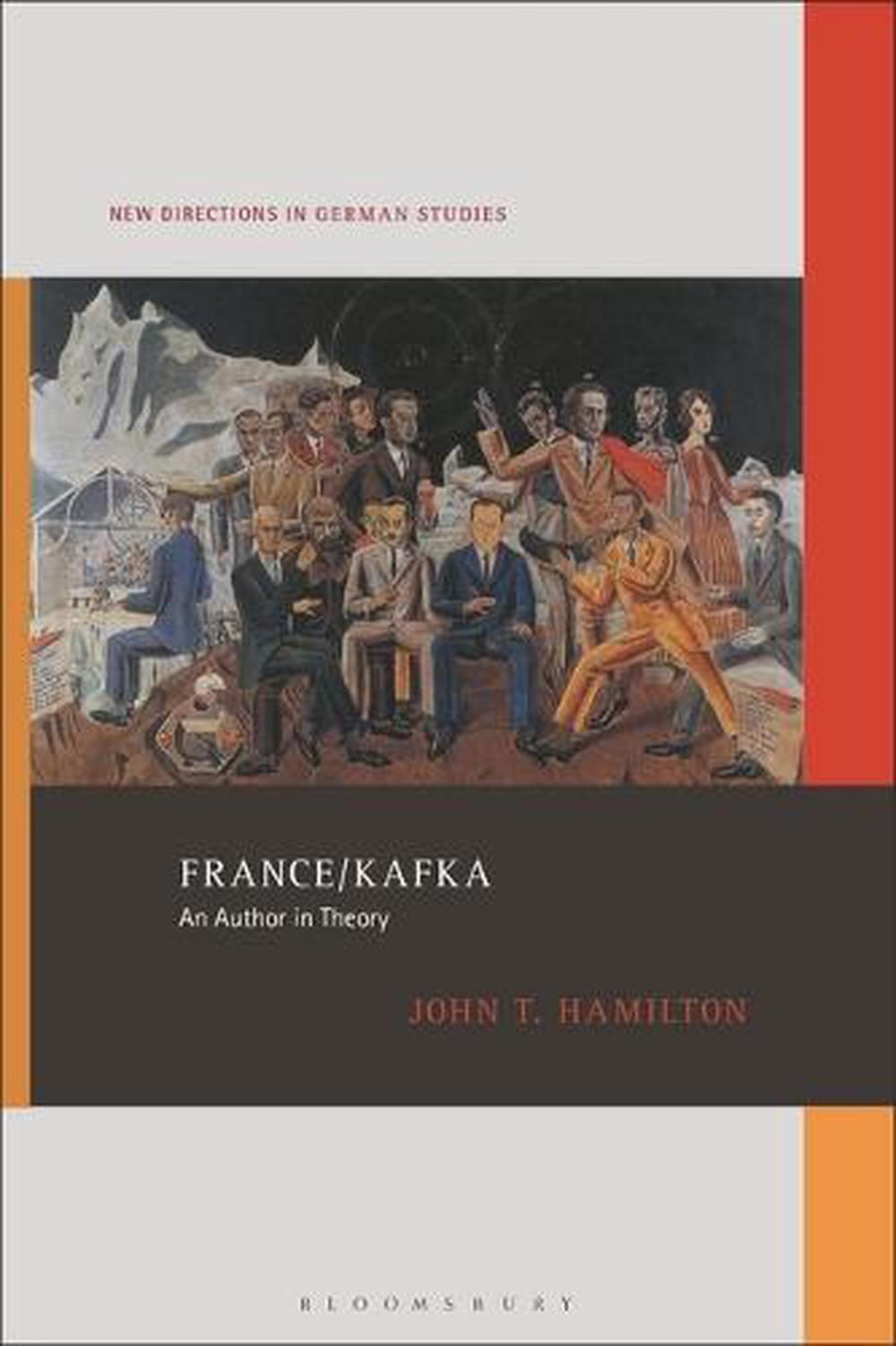
COMPLIT 291X/GERMAN 291/ROM-STD 201: Questions of Theory

Jeffrey Schnapp, John T. Hamilton

The seminar is built around a sequence of fundamental questions regarding the literary disciplines and media studies, their history and epistemology. Discussions are instigated by readings in philology, stylistics, the history of ideas, semiotics, structuralism, psychoanalysis, post-structuralism, film and media theory, genetic criticism, literary sociology, cultural studies, and digital humanities.

In Person

Fall 2025

Harvard Hall 103

Tuesday

TS 280: Translation Proseminar: History, Research, Theories, Craft

Spencer Lee-Lenfield

This course has several interrelated but distinct missions. First, we read selected major works from the history of attempts to theorize literary translation. Second, we read an array of contemporary examples of research on the translation of literature. Third, we also speak with a range of visitors about the production, publication, and dissemination of translations. And fourth, students have an option of drafting a research article or undertaking a major translation project. Graduate students from a range of disciplines are welcome; those pursuing the Secondary Field in Translation Studies (for which this class is a capstone requirement) will receive priority. Undergraduates interested in the course should contact me to explain their reasons; seats will be allocated as available.

In Person

People

Harry Tuchman Levin Professor in Literature, Professor of East Asian Languages and Civilizations, Harvard College Professor

Faculty of Arts and Sciences

Office: c/o Reischauer Institute CGIS South S222 1730 Cambridge Street, Cambridge, MA 02138 USA

Office Hours: Fall 2026: Thursdays 10:30-11:30am or by appointment

Harry Starr Professor of Classical and Modern Jewish and Hebrew Literature

Faculty of Arts and Sciences

Office: Semitic Museum, 6 Divinity Ave., Room 209

Office Hours: On Leave 2026-27

Smith Professor of Romance Languages and Literatures and Comparative Literature

Faculty of Arts and Sciences

Office: Boylston 327

Office Hours: Mondays 12-1.30 or by appointment

Irving Babbitt Professor of Comparative Literature and Professor of English, Emeritus

Faculty of Arts and Sciences

Chair, Department of Comparative Literature

Faculty of Arts and Sciences

Office: Boylston Hall 231

Office Hours: Wednesdays 12-1pm and by appointment

Sangam Professor of South Asian Studies and Comparative Literature

Faculty of Arts and Sciences

Office: 1 Bow Street, 336

Office Hours: Fall 2026 by appointment only, but generally available in the afternoons

Areas of Study