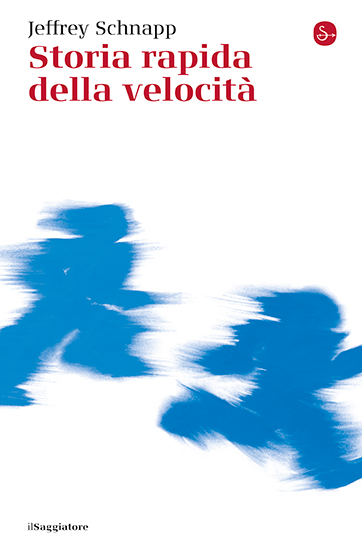
Areas of Study

Philosophy and literature

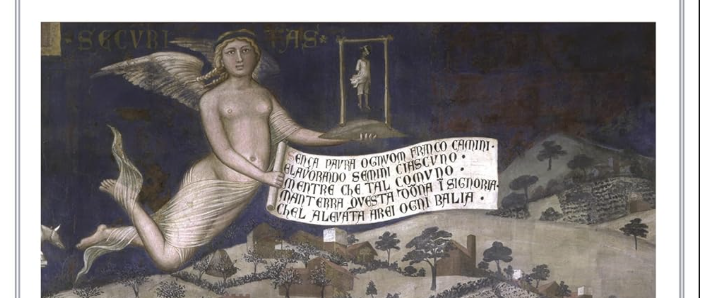
From the dust jacket: “In A Fast-Paced History of Speed (Storia rapida della velocità, Milan: Il Saggiatore, 2025), Jeffrey Schnapp spans millennia, cultures, and technologies to explore the profound relationship between velocity and civilization. This is not merely a history of technology or transportation, but a fascinating journey into the imagination and sensibilities of modern humanity—-forever poised between the desire for transcendence and the limitations of the body.

From the Spartan Ladas, who ran so fast he seemed to float through the air, to the cosmic wheels that envelop Dante in the Paradiso; from Thomas De Quincey’s mail coach to the Futurist race cars of Filippo Tommaso Marinetti; from J.M.W. Turner fiery portraits of locomotives to Nvidia’s latest superchip— every form of acceleration tells a story of metamorphosis. And every transformation carries a promise to surpass the human but also the risk of losing oneself in a world that moves too fast.

With intelligence and irony, Schnapp reconstructs an anthropology of speed made of bodies, machines, ecstasies, and crashes. A book that urges us to reflect on what we are becoming. Because in our race toward the future, speed is not just a means—-it is the very measure of what we call progress, power, and existence.”

Storia rapida della velocità was awarded the 2025 Premio di saggistica “Città delle rose” (in the non-Italian author category): an honor whose prior recipients include Alberto Manguel, Marc Augé, Michail Chodorkovskji, Edgar Morin, and Tzvetan Todorov.

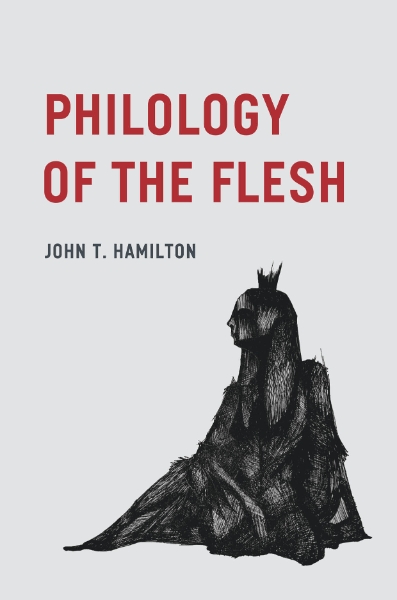
Courses

Spring 2026

Wednesday

COMPLIT 157/RELIGION 1446/HDS 3723: From Type to Self in the Middle Ages

Luis Girón-Negrón

It has been argued that the poetic “I” in premodern literatures is not a vehicle for self-representation, but an archetype of the human. The course will examine this thesis against the rise of autobiographical writing in medieval and early modern Europe. Readings include spiritual autobiographies (Augustine, Kempe, Teresa of Ávila), letter collections (Abelard and Heloise), Arabic and Hebrew maqama literature, Provençal troubadour lyric, Hispano-Jewish poetry (Samuel ha-Nagid, Judah Halevi, Solomon ibn Gabirol), prison poetry (Jacopone da Todi, al-Mutamid of Seville, François Villon), pilgrimage narratives, travel literature, Petrach, Dante (Vita nuova and selections of the Commedia), Ibn Ḥazm of CórdobaLatin American chronicles, and the picaresque novel (Lazarillo de Tormes). Theoretical perspectives by Spitzer, Lejeune, Zumthor, and DeCerteau.

Course note: This course counts for the Romance Studies track in the Department of Romance Languages and Literatures.

In Person

Spring 2026

Thursday

COMPLIT 166X/ROM-STD 166: Calvino and Computation

Jeffrey Schnapp

Course video

One of the towering literary figures of the 20th century, Italo Calvino is remembered for his inventiveness, versatility, philosophical acuity, and interest in exploring combinatorial and computational approaches to creative practice. Using as its point of departure his 1967 lecture Cybernetics and Ghosts, the course is built around readings of some of Calvino’s most celebrated novels, among them: The Castle of Crossed Destinies, If on a winter’s night a traveler, and Invisible Cities. But we will also read from his Six Memos for the Next Millennium and critical writings, from writings by figures in contemporary cybernetics and communication theory, and from the Italian structuralist tradition, Oulipo, and the Programmed Art movement of the 1970s. Class assignments will involve the speculative, creative, and critical use of Generative AI tools and the generation of plausible “new” works by Calvino forty years after his death.

In Person

Fall 2025

Dana-Palmer Seminar Room

Monday

COMPLIT 226: Peripheral Modernisms

David Damrosch

Recent years have seen attempts to rethink modernism as a global phenomenon rather than a mostly Anglo-American and West European movement. Center-periphery relations have often been foregrounded in these efforts, and in critiques of them. Building on theoretical statements by Jorge Luis Borges, Oswald de Andrade, Pascale Casanova, Susan Stanford Friedman, Franco Moretti, Oe Kenzaburo, and Roberto Schwarz, this seminar will explore the politics of language, representation, and center-periphery relations in works by Antonio Machado de Assis, Ryunosuke Akutagawa, Higuchi Ichiyo, James Joyce, Miguel Ángel Asturias, Franz Kafka, Eileen Chang, Clarice Lispector, Lu Xun, Ahmet Hamdi Tanpınar, and Pramoedya Ananta Toer.ars have seen ambitious attempts to rethink modernism as a global phenomenon rather than a largely Anglo-American and West European movement. Center-periphery relations have often been foregrounded in these efforts, and in critiques of them. Building on theoretical statements and critiques by Jorge Luis Borges, Kenzaburo Oe, Franco Moretti, Pascale Casanova, Emily Apter, Eric Hayot, and Susan Stanford Friedman, this seminar will explore the politics of language, periodization, and center-periphery relations both within and beyond the West, in works by Higuchi Ichiyo, James Joyce, Lu Xun, Ryunosuke Akutagawa, Virginia Woolf, Djuna Barnes, Borges, Kukrit Pramoj, Pramoedya Ananta Toer, and Derek Walcott.

In Person

People

Smith Professor of Romance Languages and Literatures and Comparative Literature

Faculty of Arts and Sciences

Office: Boylston 327

Office Hours: On leave 2025-2026

Irving Babbitt Professor of Comparative Literature and Professor of English, Emeritus

Faculty of Arts and Sciences

Office: Barker Center 265

Director of Graduate Studies

Faculty of Arts and Sciences

Office: Boylston Hall 231

Office Hours: Wednesday 12-1pm or by appointment

Byron and Anita Wien Professor of Drama and of English and Comparative Literature

Faculty of Arts and Sciences

Office: Barker 220

Office Hours: On Leave Fall 2025

Francis Jones Professor of Classical Greek Literature and Professor of Comparative Literature

Faculty of Arts and Sciences

Office: Boylston Hall 228

Office Hours: Mon 2:30-3pm or by appointment

William R. Kenan Professor of German and Comparative Literature

Faculty of Arts and Sciences

Office: Barker Center 345

Office Hours: Wed 3-5pm

Areas of Study