Areas of Study

Literature and politics

“New Directions in Indonesian Feminism,” Featuring Indonesian author Intan Paramaditha, in conversation with Prof. Annette Lienau & Doctoral Student Lara Norgaard, sponsored by the Asia Center, May 2022.

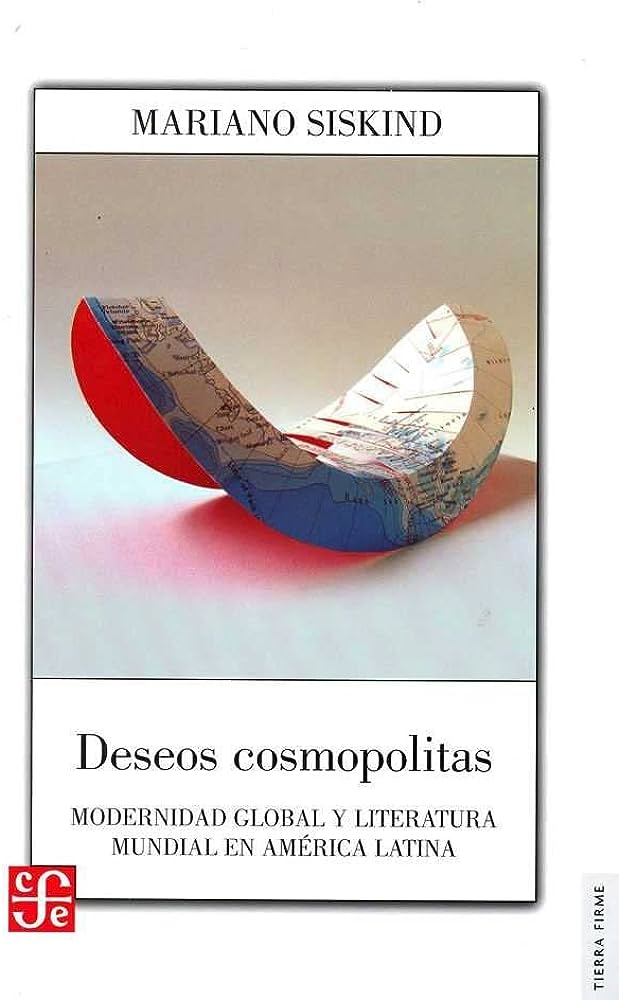
The Routledge Companion to Twentieth and Twenty-First Century Latin American Literary and Cultural Formsbrings together a team of expert contributors in this critical and innovative volume.

Highlighting key trends within the discipline, as well as cutting-edge viewpoints that revise and redefine traditional debates and approaches, readers will come away with an understanding of the complexity of twenty-first-century Latin American cultural production and with a renovated and eminently contemporary understanding of twentieth-century literature and culture.

This invaluable resource will be of interest to advanced students and academics in the fields of Latin American literature, cultural studies, and comparative literature.

Courses

Fall 2026

Tuesday

ROM-STD 103: Who is a Fascist? Culture and Politics on the Radical Right

Jeffrey Schnapp

Course Video

The course provides a lively, in-depth introduction to fascism, its philosophical and political roots, its critique of liberal democracy and socialism, and the traces fascism has left on the contemporary cultural-political scene. It begins with readings from key fascist thinkers and theorists, before surveying a series of domains where artists, writers, architects, film-makers, and engineers sought to interpret and embody the “fascist revolution” not just in Italy but worldwide. Among the figures considered are mystical nationalists like Gabriele D’Annunzio; Filippo Tommaso Marinetti, founder and leader of the Futurist movement; the American poet Ezra Pound, author of the Cantos, one of the masterpieces of 20th century American poetry; Leni Riefenstahl, the film director of classic documentaries such as Olympia and Triumph of the Will; the architects Marcello Piacentini and Adolf Speer, the former Italy’s leading designer of public monuments and buildings during the Mussolini era, the latter Hitler’s preferred architect; and the engineer Gaetano Ciocca, creator of everything from Corporativist pig farms to mass-produced worker housing to mass sports stadia. Course themes will include: fascism vs. nazism; collectivism vs. individualism; radical right attitudes towards technology and industrialization; and examinations of the convergences and divergences between mid-20th century fascisms and the sub-cultures of today’s alt-right.

In Person

Spring 2026

Dana-Palmer Seminar Room

Wednesday

COMPLIT 221X: I Forget: The Politics of Memory in Cold War Literature and Film

Matylda Figlerowicz

Remembering and forgetting, evoking and overlooking: they are parts of our everyday life, as well as practices that cement cultures, traditions, and our ideas of self. This course explores the connections between literature and memory. It looks at a period of particular global conflict over memory, when after the end of World War II, the world moves into the decades of the Cold War. We ask how literature participates in the construction of memory and how it sheds light on different sorts of vulnerability and abuses of memory. In what different roles does literature put us as readers in order to compel us to keep memory alive, participate in its construction, or be tempted into forgetfulness? Through literary and theoretical texts, we will discuss the role of literature in narrating tragic and overwhelming experiences, which hardly find their place in language. We will look at the ways in which past and its evocation can be––deliberately or not––distorted, censored, and used for political aims. And we will reflect on everyday practices of trying to keep memory alive, or trying to forget.

In Person

Spring 2026

Dana-Palmer Seminar Room

Thursday

COMPLIT 290/ENG 290MH: Migration and the Humanities

Homi Bhabha

By focusing on literary narratives, cultural representations, and critical theories, this course explores ways in which issues related to migration create rich and complex interdisciplinary conversations. How do humanistic disciplines address these issues—human rights, cultural translation, global justice, security, citizenship, social discrimination, biopolitics—and what contributions do they make to the “home” disciplines of migration studies such as law, political science, and sociology? How do migration narratives compel us to revise our concepts of culture, polity, neighborliness, and community? We will explore diverse aspects of migration from existential, ethical, and philosophical perspectives while engaging with specific regional and political histories.

In Person

Fall 2025

Now in Emerson 101

Tuesday

COMPLIT 112X: Sinophone Sci-Fi: Reparative Co-Futures

Ursula Friedman

How does modern Sinophone sci-fi reveal the “dark side” of China’s rise to power? How does Sinophone speculative fiction and its transmediated afterlives chart a reparative vision in the face of ongoing ecological and political crises? How do memories of past traumas intersect with future catastrophes in short stories and novels by Sinophone creators? How does speculative fiction produced by women and nonbinary creators forge an alternative path for human-AI collaboration? How do queer, transgressive, and non-human desires coalesce into a flora-fauna-AI symbiosis? How does contemporary Sinophone sci-fi advance inclusive futures for queer, crip, rural, neurodiverse, non-Han, and otherwise disenfranchised individuals in the face of ongoing exploitation? How do translators of Chinese-sci-fi employ a reparative praxis to transmediate trauma for global audiences?

In this course, we encounter an array of sci-fi and speculative fiction authored by Ken Liu, Cixin Liu, Han Song, Regina Kanyu Wang, Hao Jingfang, Xia Jia, Gu Shi, Wang Nuonuo, and Chu Xidao, alongside selections by Jorge Luis Borges, Adolfo Bioy Casares, Italo Calvino, Octavia Butler, Margaret Atwood, Ursula K. LeGuin, Ray Bradbury, and Isaac Asimov (reading selections subject to change). We will also examine multimedia adaptations of contemporary Chinese sci-fi, examining the work’s evolution from page to screen to stage. All readings will be available in English and films will be available either dubbed or with English subtitles. By engaging with material through a variety of written, oral, and multimedia responses, you will co-create reparative futures alongside these speculative creators.

In Person

Fall 2025

Dana-Palmer Seminar Room

Monday

COMPLIT 226: Peripheral Modernisms

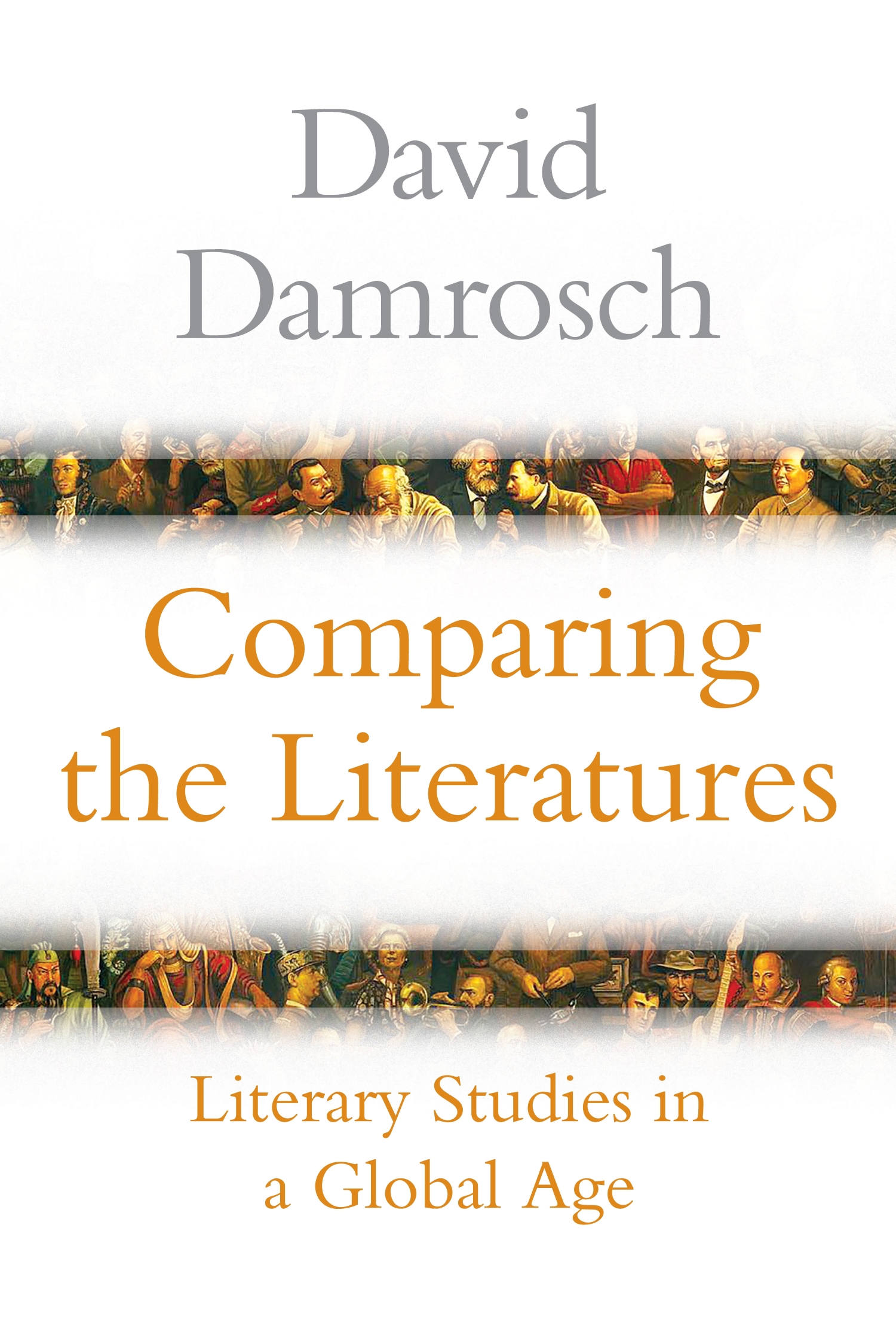
David Damrosch

Recent years have seen attempts to rethink modernism as a global phenomenon rather than a mostly Anglo-American and West European movement. Center-periphery relations have often been foregrounded in these efforts, and in critiques of them. Building on theoretical statements by Jorge Luis Borges, Oswald de Andrade, Pascale Casanova, Susan Stanford Friedman, Franco Moretti, Oe Kenzaburo, and Roberto Schwarz, this seminar will explore the politics of language, representation, and center-periphery relations in works by Antonio Machado de Assis, Ryunosuke Akutagawa, Higuchi Ichiyo, James Joyce, Miguel Ángel Asturias, Franz Kafka, Eileen Chang, Clarice Lispector, Lu Xun, Ahmet Hamdi Tanpınar, and Pramoedya Ananta Toer.ars have seen ambitious attempts to rethink modernism as a global phenomenon rather than a largely Anglo-American and West European movement. Center-periphery relations have often been foregrounded in these efforts, and in critiques of them. Building on theoretical statements and critiques by Jorge Luis Borges, Kenzaburo Oe, Franco Moretti, Pascale Casanova, Emily Apter, Eric Hayot, and Susan Stanford Friedman, this seminar will explore the politics of language, periodization, and center-periphery relations both within and beyond the West, in works by Higuchi Ichiyo, James Joyce, Lu Xun, Ryunosuke Akutagawa, Virginia Woolf, Djuna Barnes, Borges, Kukrit Pramoj, Pramoedya Ananta Toer, and Derek Walcott.

In Person

People

Lecturer on Comparative Literature

Faculty of Arts and Sciences

Office: Mather House Dean's Office, 10 Cowperthwaite Street

Assistant Professor of Comparative Literature

Faculty of Arts and Sciences

Office: Dana-Palmer 204

Office Hours: On Leave 2026-27

Francis Jones Professor of Classical Greek Literature and Professor of Comparative Literature

Faculty of Arts and Sciences

Office: Boylston Hall 228

Office Hours: Fall 2026 TBA

Assistant Professor of Comparative Literature

Faculty of Arts and Sciences

Office: Dana-Palmer 203

Office Hours: Fall 2026 TBA

William R. Kenan Professor of German and Comparative Literature

Faculty of Arts and Sciences

Office: Barker Center 345

Office Hours: Thursdays 11 - 12:30pm

Visiting Research Professor of Comparative Literature and Romance Languages and Literatures

Faculty of Arts and Sciences

Office: 175 Widener

Areas of Study